Watch · Europa Wire
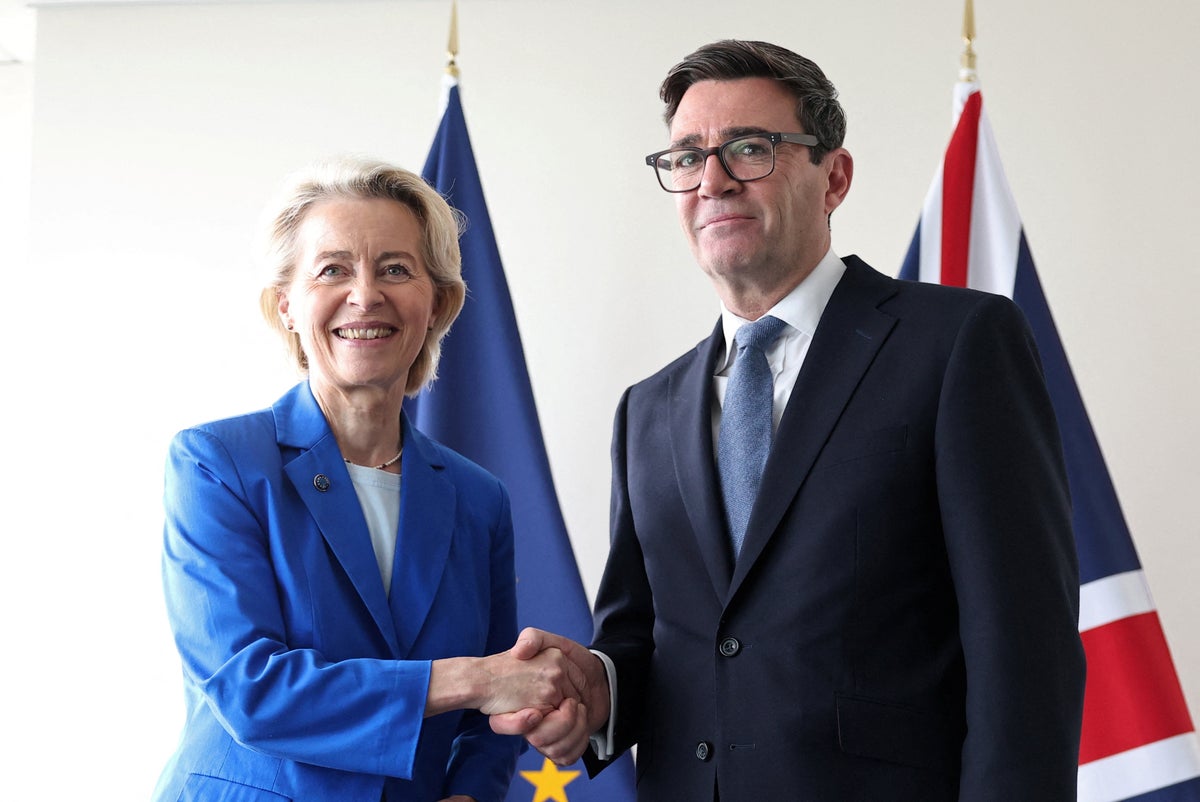
A new trade deal with the European Union worth billions to the UK economy must be a “launch pad” for reversing Brexit, Andy Burnham has been warned. The prime minister is set to unveil a deal with Brussels at the end of the month worth 0.4 per cent on the UK GDP, which will see border checks on food and drink stripped away, a new youth mobility scheme and a much closer working partnership with the bloc. He has set out to be bolder than his predecessor Sir Keir Starmer but has maintained Labour’s manifesto red lines which prevent agreements on free movement, or rejoining the EU, customs union or single market.
Instead, he plans to use the summit in Brussels on 20 November to launch a new discussion on the options for the UK beyond the next election, with rejoining the bloc on the cards as a manifesto pledge. Prime Minister Andy Burnham and European Commission President Ursula von der Leyen will meet again at a major UK-EU summit in November (Toby Melville/PA) (PA Wire) Louise Haigh, who was standing in for Andy Burnham at Prime Minister’s Questions on Wednesday, said the Brexit deal Labour inherited from the Tories had “damaged our economy, weakened our ability to control immigration, and took opportunities away from young people”. “We know that a deal can add billions to our economy – cutting costs for exports, helping supermarkets bring down prices and supporting British farmers.
We are working with the EU to create a balanced youth travel scheme creating opportunities for them to live, work and study abroad,” she added. Tom Brufatto, policy and research director at Best for Britain, which campaigns for the UK to restore its place at the heart of Europe, said that the new deal must by a “launch pad” to rejoining. He told The Independent : "Progress ahead of the upcoming UK-EU summit is notable: these deals represent not just billions for our economy, but the snowballing positive impact of increased trade and reduced friction for businesses, investment and jobs in communities up and down the UK, and – crucially – essential action on the cost of living crisis as voters continue to feel the squeeze.
"Looking ahead, it's vital that the summit is a launch pad for the PM to go much further on European relations, if he is to have any hope of delivering his promise of growth in every postcode. Burnham must recognise that far from getting ahead of the British people on this, politicians are - at long last - catching up with public opinion and geopolitical reality." Mike Galsworthy, chair of the pro-EU group, European Movement UK, praised Mr Burnham for “doing the hard thing – but also the hugely rewarding thing”. He told The Independent that it must now be part of the process of showing the Labour Party that being pro-EU is a winning strategy for the next election.
He said: “By making big moves now, he is not only securing significant wins on economic fronts but also doing two other things: Firstly, he's showing Europe that he's very serious about engaging and willing to take risks. Secondly, he's showing the nervous people in his own party that being bold pays off with public support. “It takes a huge amount of energy to shock the UK out of its Brexit rut, but that's what Andy Burnham is vigorously doing.
For those of us set on full EU membership, it's absolutely not lost on us that this, if it works, tees up the right ‘can do’ spirit for a manifesto promise and ideal circumstances for negotiations on full EU membership in the next parliament. So, at this stage, he is being very ambitious and seems to be paying off.” But while the deal on 20 November is also expected to include defence cooperation and open the door to the UK being involved the EU’s military procurement, campaigners have warned that Mr Burnham needs to be ready to go much further in the future. The expected deal on border checks comes amid concerns over the impact the planned new digital system will have on fresh food.
Full implementation of the system has been previously delayed, with problems of fruit and vegetables as well as meat still being held up at the border. Foreign minister Hamish Falconer has led the most recent talks (Getty) Added to that, much UK produce has had to carry a “not for sale in the EU” sticker. Marco Forgione, director general of the Chartered Institute of Export and International Trade, told The Independent : “Removing friction and costs is positive.
Agreeing dynamic alignment will help some UK businesses, but others will now face increased costs and friction.” But he added: “We need to have an honest appraisal of costs and benefits, especially as it will affect our existing free trade agreements. Undoubtedly, EU businesses will benefit as their costs and friction are reduced and competing imports from the rest of the world to the UK now face EU rules and regulations and will have to comply as these change over time.” Certain parts of the deal will not be put in place until 2028, however, those close to the talks insist the process will not be derailed by continued disagreements on European industrial policy or UK university fees. Parts of the deal, which will see the UK pay the EU for access to its emissions trading scheme, face criticism from those who argue Britain is signing up to the same rules it was seeking to avoid when it left the bloc.
Source: The Independent